The farm sector is bracing for a slight decline in income in 2026, according to the latest forecast. The agricultural economy, which has been a vital backbone of the US economy, is expected to experience a modest downturn in the coming year. Net farm income, a broad measure of profits, is forecast to decline by $1.2 billion, or 0.7 percent, compared to 2025, reaching a total of $153.4 billion. This development is being closely watched by farmers, policymakers, and agricultural finance experts, who are keenly aware of the sector’s importance to the nation’s food supply and economic stability.
Farm Sector Income Forecast for 2026 Released
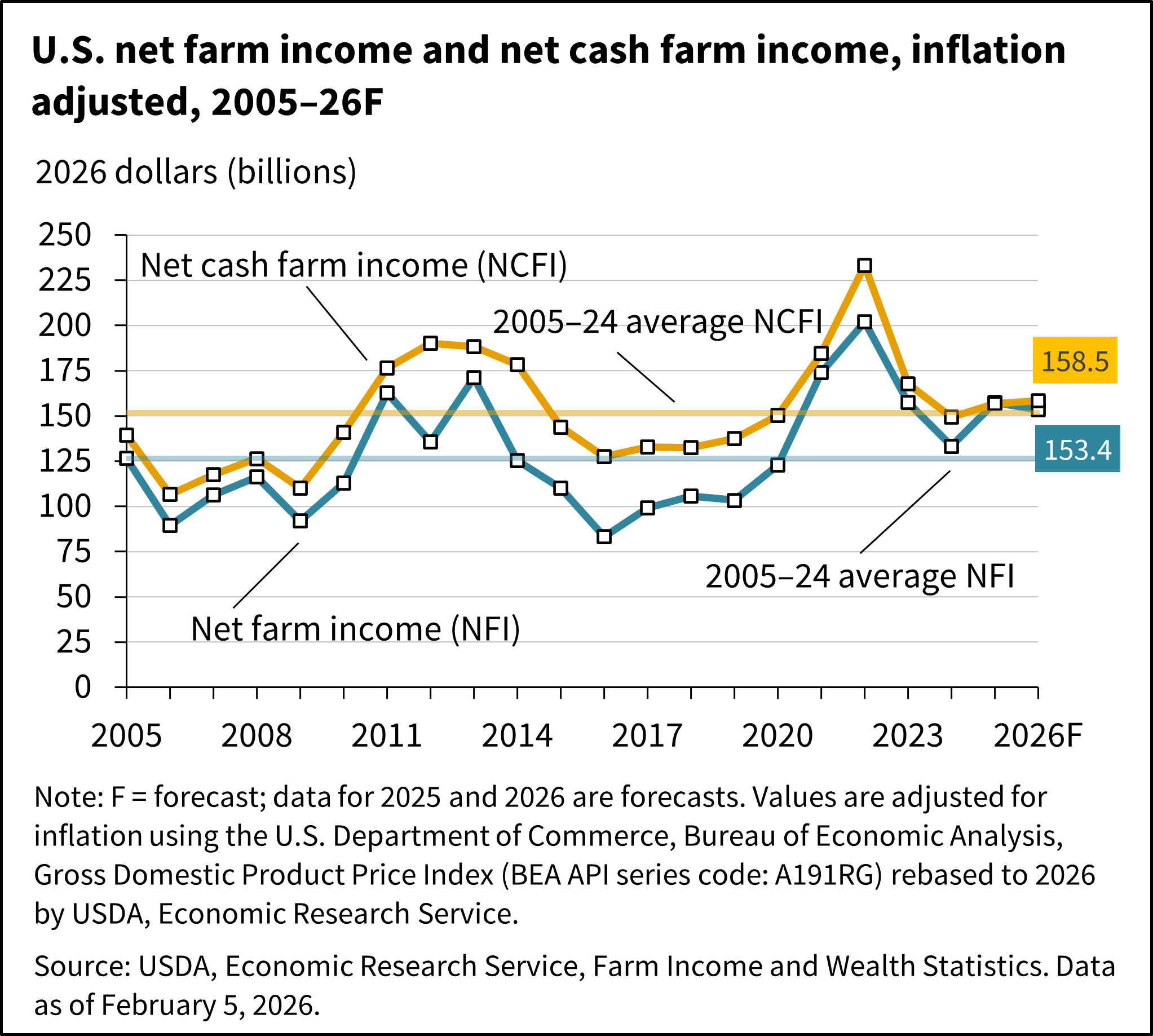
The U.S. farm sector income is forecast to decline slightly in 2026, with net farm income projected to reach $153.4 billion for the calendar year. This represents a $1.2 billion (0.7 percent) decrease from 2025 levels. Despite the decline, net farm income would still be above its 2005-24 average in inflation-adjusted dollars.
| Aspect | Details |
|---|---|
| Event | Net farm income forecast to decline slightly |
| Date | 2026 |
| Location | United States |
| Key People/Organizations | Economic Research Service |
| Status/Current Situation | Forecast |
| Impact/Casualties | $1.2 billion (0.7 percent) lower than in 2025 |
| Net Farm Income Forecast | $153.4 billion |
| Net Cash Farm Income Forecast | $158.5 billion |
| Change in Net Cash Farm Income | $4.6 billion (3 percent) |
| Change in Net Farm Income (inflation-adjusted) | $4.1 billion (2.6 percent) |
Net cash farm income, on the other hand, is forecast to increase by $4.6 billion (3 percent) to $158.5 billion in 2026, compared to 2025 levels. In inflation-adjusted dollars, net cash farm income is forecast to rise by $1.7 billion (1.1 percent) from 2025 to 2026. These projections indicate that the farm sector’s financial indicators are expected to remain strong, with both measures surpassing their historical averages.
The decline in farm sector income can be attributed to a decrease in farm cash receipts, which are forecast to drop by $14.2 billion (2.7 percent) to $514.7 billion in 2026. However, total crop receipts are expected to increase by $2.8 billion (1.2 percent) to $240.8 billion in 2026, driven by higher receipts for corn.
Factors Contributing to the Forecasted Decline

A decline in farm sector income is forecast for 2026, with net farm income expected to drop by $1.2 billion (0.7 percent) from 2025 levels. This decrease is attributed to various factors, including a projected decline in farm cash receipts. In nominal dollars, farm cash receipts are forecast to decrease by $14.2 billion (2.7 percent) from 2025 to $514.7 billion in 2026.
The decline in farm cash receipts is primarily driven by a decrease in total crop receipts, which are forecast to drop by $11.4 billion (4.5 percent) from 2025 levels. However, this decline is partially offset by an increase in total livestock receipts, which are forecast to rise by $3.2 billion (2.2 percent) from 2025 levels.
The forecast decline in farm sector income is a concern for the agricultural economy, as it may impact farm earnings and agricultural finance. The decline in farm sector income is a significant factor in the overall economic outlook for 2026, and its impact will be closely monitored by policymakers and industry experts.
Impact on Agricultural Economy and Finances

The decline in net farm income is expected to have a ripple effect on the agricultural economy and finances. Net farm income is forecast to decline slightly in 2026, reaching $153.4 billion for the calendar year, a decrease of $1.2 billion (0.7 percent) from 2025. This decline is attributed to a decrease in farm cash receipts, which are forecast to drop by $14.2 billion (2.7 percent) from 2025 to $514.7 billion in 2026.
Despite the decline in net farm income, net cash farm income is forecast to increase by $4.6 billion (3 percent) relative to 2025, reaching $158.5 billion in 2026. This increase is a result of higher receipts for certain crops, such as corn, which are expected to contribute to the growth in total crop receipts. Total crop receipts are forecast to increase by $2.8 billion (1.2 percent) from 2025 levels to $240.8 billion in 2026.
The impact of the decline in net farm income on the agricultural economy and finances is a concern for policymakers and farmers alike. The decrease in farm cash receipts and net farm income may lead to reduced spending and investment in the farm sector, potentially affecting the overall economic growth of rural areas. However, the forecast also suggests that both measures in 2026 would be above their 2005–24 averages in inflation-adjusted dollars, indicating a positive trend in the long term.
Expert Analysis and Predictions for the Future
Farm sector income is expected to face a slight decline in 2026, with net farm income forecasted at $153.4 billion for the calendar year. This represents a decrease of $1.2 billion, or 0.7 percent, compared to 2025. Despite this decline, net cash farm income is predicted to increase by $4.6 billion, or 3 percent, reaching $158.5 billion in 2026.
The forecast indicates that net farm income will decline by $4.1 billion, or 2.6 percent, in inflation-adjusted dollars from 2025 to 2026. However, net cash farm income is expected to increase by $1.7 billion, or 1.1 percent, compared to the previous year. These figures suggest that the farm sector will still be performing above its 2005-24 averages in inflation-adjusted dollars.
The slight decline in net farm income is attributed to a decrease in farm cash receipts, which are forecasted to drop by $14.2 billion, or 2.7 percent, from 2025 to $514.7 billion in 2026. However, total crop receipts are expected to increase by $2.8 billion, or 1.2 percent, due to higher receipts for corn. These fluctuations in farm income and receipts will have significant implications for the agricultural economy and finances in 2026.
Government Response and Support for Farmers
The government has been actively involved in supporting farmers through various initiatives. In response to the forecasted decline in farm sector income, policymakers have been working to implement measures that would mitigate the impact on farmers. A key aspect of the government’s response is providing financial assistance to farmers who are struggling to make ends meet. This includes programs aimed at helping farmers manage their debt and access credit at favorable interest rates.
To address the decline in farm cash receipts, the government has been exploring ways to increase demand for agricultural products. One strategy being considered is promoting exports of farm commodities, which could help to boost farm earnings. Additionally, the government is working to improve the efficiency of agricultural production, which could lead to cost savings for farmers and help to increase their competitiveness in the global market.
The government’s support for farmers is also focused on improving their access to resources and information. A key initiative in this area is the development of online platforms and tools that provide farmers with access to market data, weather forecasts, and other critical information. This is designed to help farmers make informed decisions about their operations and improve their overall productivity.
Future Outlook and Potential Opportunities
Despite the forecasted decline in net farm income, the agricultural economy is expected to experience some positive developments in 2026. Net cash farm income is forecast to increase by $4.6 billion (3 percent) relative to 2025, reaching $158.5 billion for the calendar year. This increase is a significant improvement from the previous year, indicating a potential for growth in the farm sector.
The farm sector’s overall financial performance is also expected to be boosted by higher receipts for certain crops. Total crop receipts are forecast to increase by $2.8 billion (1.2 percent) from 2025 levels to $240.8 billion in 2026, driven by higher prices for corn. This increase in crop receipts is a welcome development for farmers and the agricultural economy as a whole.
While the forecasted decline in net farm income is a concern, the fact that both net farm income and net cash farm income are expected to be above their 2005-24 averages in inflation-adjusted dollars is a positive sign for the farm sector. This suggests that the agricultural economy is on a path towards recovery and growth, despite the challenges posed by the forecasted decline in net farm income.