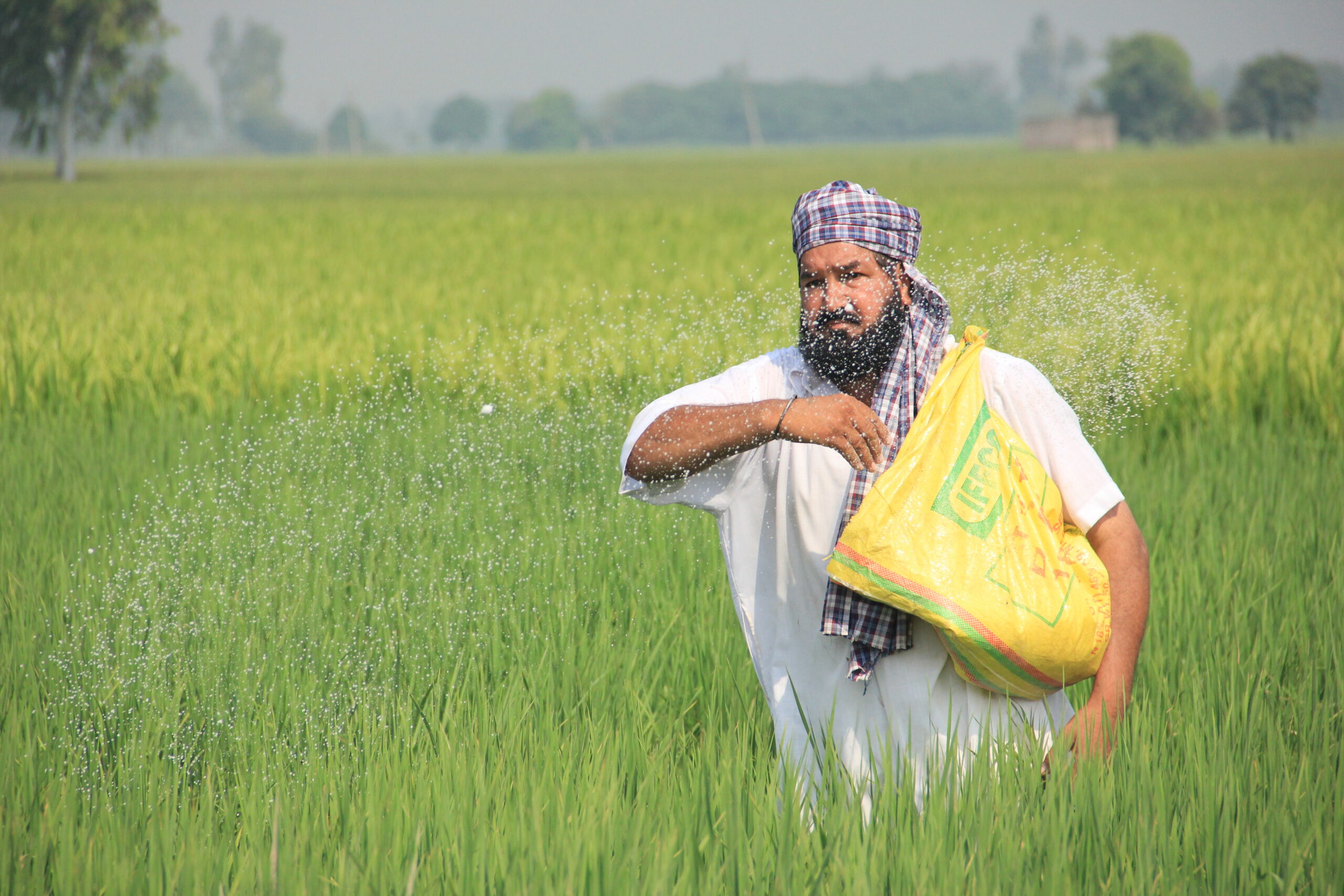
India’s agricultural sector, a backbone of the country’s economy, has long relied on the strategic use of chemical fertilisers to boost crop yields. For decades, the Green Revolution has driven the widespread adoption of fertilisers, with India accounting for over 10% of global fertiliser consumption. However, a growing concern has emerged regarding the unbalanced application of these fertilisers, with Indian farmers often favouring nitrogen-based over potassium-based options. This disparity has been partly attributed to differential subsidies across fertiliser types, leading to a pressing need for a more sustainable and balanced approach to fertiliser use. As the world’s second-most populous country, India’s agricultural productivity is crucial to its economic growth and food security.
The Current State of Fertiliser Use in Indian Agriculture
India’s agriculture has long relied on chemical fertilisers, with the country emerging as one of the largest consumers in the world. The use of fertilisers has grown significantly over the years, with the Indian government spending between $10 billion and $11 billion annually on subsidies alone. However, this heavy reliance on fertilisers has led to environmental degradation, soil acidification, and negative impacts on biodiversity and human health.
| Aspect | Details |
|---|---|
| Event | Balancing fertiliser use for higher yields and sustainable agriculture |
| Date | 6 Nov 2025 |
| Location | India |
| Key People/Organizations involved | Julian Arteaga, Klaus Deininger |
| Status/Current Situation | Indian agriculture can achieve productivity gains |
| Impact/Casualties | Environmental degradation, soil acidification, greenhouse gas emissions, negatively impacts biodiversity and human health |
| Official Response | Indian government spends US$10 billion to US$11 billion a year on fertiliser subsidies |
| Key Finding | Doubling the ratio of potassium-based to nitrogen-based fertilisers would raise yields by almost 5% |
| Current Fertiliser Use | Indian farmers use chemical fertilisers in an unbalanced manner |
| Recommended Action | Improve fertiliser balance rather than increasing volume of fertiliser use |
The overapplication of chemical fertilisers is a pressing concern, with Indian farmers using fertilisers in a highly imbalanced way. Nitrogen-based fertilisers, particularly urea, are applied in far greater quantities than other essential nutrients like phosphorus and potassium. This imbalance can lead to reduced crop yields and decreased agricultural productivity. Furthermore, the excessive use of fertilisers puts a strain on the environment, contributing to greenhouse gas emissions and soil degradation.
The current fertiliser use practices in India are characterised by high application levels and an unbalanced ratio of fertiliser types. This has significant implications for Indian farmers, who face challenges in achieving sustainable agriculture practices. The consequences of excessive fertiliser use are far-reaching, affecting not only the environment but also the livelihoods of farmers and the broader agricultural sector.
The Benefits of Balanced Fertiliser Use for Higher Yields

Balanced fertiliser use can lead to increased crop yields, benefiting Indian farmers in several ways. By applying the right amount and ratio of nutrients, farmers can improve the overall health of their crops, resulting in higher yields and better quality produce. For instance, doubling the ratio of potassium-based to nitrogen-based fertilisers can raise yields by almost 5% without increasing overall fertiliser expenditure. This approach not only boosts farmers’ incomes but also enhances the country’s food security.
The economic impact of balanced fertiliser use cannot be overstated. With improved crop yields, Indian farmers can increase their earnings, contributing to the country’s economic growth. Moreover, by adopting sustainable agricultural practices, farmers can reduce their reliance on expensive fertilisers, saving them money in the long run. A balanced fertiliser approach can also help reduce the country’s environmental footprint, as excessive fertiliser use can lead to soil acidification and greenhouse gas emissions.
By adopting balanced fertiliser use, Indian farmers can not only improve their yields and earnings but also contribute to the country’s sustainable development. This approach requires a shift in mindset, however, as farmers need to move away from the traditional practice of overapplying nitrogen-based fertilisers. With the right guidance and support, Indian farmers can adopt more sustainable practices, ensuring a brighter future for their crops and the environment.
Correcting the Imbalance: Strategies for Sustainable Agriculture

Experts say that achieving balanced fertiliser use in Indian agriculture requires a fundamental shift in the way farmers think about crop management. “Indian farmers need to move away from the mindset of applying fertilisers as a quick fix for yield increases,” says a leading agronomist. “Instead, they need to adopt a more holistic approach that takes into account the long-term health of their soil and the environment.” This involves using a balanced mix of fertilisers that includes essential nutrients like phosphorus and potassium, which are often overlooked in favour of nitrogen-based fertilisers.
Practical strategies for achieving balanced fertiliser use include adopting precision agriculture techniques that allow farmers to apply fertilisers more accurately and efficiently. “Precision agriculture can help farmers to identify areas of their fields where fertilisers are most needed, reducing waste and environmental impact,” explains a leading expert in the field. Another key strategy is to promote the use of organic fertilisers, which can help to improve soil health and reduce the need for chemical fertilisers. By adopting these strategies, Indian farmers can not only improve crop yields but also reduce their environmental impact and contribute to a more sustainable future.
The benefits of balanced fertiliser use are not just environmental, but also economic. “By using fertilisers more efficiently, farmers can reduce their costs and increase their profits,” says a leading economist. This can have a significant impact on the Indian economy, particularly in rural areas where agriculture is a major source of employment. By promoting balanced fertiliser use, policymakers can help to support Indian farmers and contribute to a more sustainable and prosperous future for the country.
Government Initiatives to Promote Sustainable Fertiliser Use
To promote balanced fertiliser use, the Indian government has launched several initiatives. The National Programme for Sustainable Agriculture (NPSA) aims to improve soil health and reduce the environmental impact of fertiliser use. This program provides support to farmers for adopting sustainable agricultural practices, including the use of balanced fertilisers. Additionally, the government has introduced subsidies for organic fertilisers, which are expected to encourage farmers to switch to more sustainable options.
The government has also implemented policies to support Indian farmers in adopting balanced fertiliser use. For instance, the Fertiliser (Control) Order, 1985 regulates the production and distribution of fertilisers, ensuring that farmers have access to a balanced range of fertilisers. Furthermore, the government has launched awareness campaigns to educate farmers about the importance of balanced fertiliser use and its benefits for agricultural productivity.
These initiatives are expected to have a positive impact on agricultural productivity in India. By promoting balanced fertiliser use, the government aims to increase crop yields while reducing the environmental impact of fertiliser use. This, in turn, is expected to benefit Indian farmers and contribute to the country’s food security.
The Way Forward: Empowering Indian Farmers for Sustainable Agriculture
As India’s agriculture sector continues to grow, future projections suggest that the country will face increasing pressure to balance fertiliser use with sustainable practices. Doubling the ratio of potassium-based to nitrogen-based fertilisers, for instance, could raise yields by almost 5% without increasing overall fertiliser expenditure. This shift towards balanced fertiliser use is crucial not only for improving agricultural productivity but also for mitigating the environmental degradation caused by excessive fertiliser use.
The impact of balanced fertiliser use on the environment cannot be overstated. Soil acidification and greenhouse gas emissions, which are often linked to high nitrogen use, can be significantly reduced by adopting more balanced fertiliser application practices. Moreover, by promoting sustainable agriculture, Indian farmers can contribute to preserving biodiversity and protecting human health. As the world’s second-largest producer of wheat and rice, India has a critical role to play in ensuring that agricultural growth is achieved in a way that is environmentally sustainable.
Indian farmers will be at the forefront of this transition towards sustainable agriculture. By adopting balanced fertiliser use practices, they can not only improve crop yields but also reduce their environmental footprint. As experts note, empowering Indian farmers with the knowledge and tools to adopt sustainable agricultural practices is essential for achieving a more balanced and environmentally friendly approach to fertiliser use.
Expert Insights: Achieving Balanced Fertiliser Use in Indian Agriculture
Achieving balanced fertiliser use in Indian agriculture is crucial for sustainable growth and higher yields. “The key is to strike a balance between different types of fertilisers,” says Dr. Ramesh Chand, a renowned agricultural economist. He emphasizes that Indian farmers need to move away from the conventional practice of relying heavily on nitrogen-based fertilisers. “By using a balanced mix of fertilisers, farmers can not only increase crop yields but also reduce their environmental footprint.”
Experts point out that the current imbalance in fertiliser use is partly driven by differential subsidies across fertiliser types. “The government’s subsidy policies have created a disincentive for farmers to use other essential nutrients like potassium and phosphorus,” notes Dr. Chand. This has led to a situation where nitrogen-based fertilisers, particularly urea, are applied in far greater quantities than other essential nutrients. However, research suggests that by doubling the ratio of potassium-based to nitrogen-based fertilisers, yields can increase by almost 5% without increasing overall fertiliser expenditure.
To achieve balanced fertiliser use, experts recommend that Indian farmers adopt a more nuanced approach to fertiliser application. “Farmers need to conduct soil tests and use precision agriculture techniques to determine the exact amount of fertilisers required for their crops,” says Dr. Chand. By adopting such strategies, Indian farmers can not only improve crop yields but also reduce their environmental impact and contribute to a more sustainable agriculture sector.