
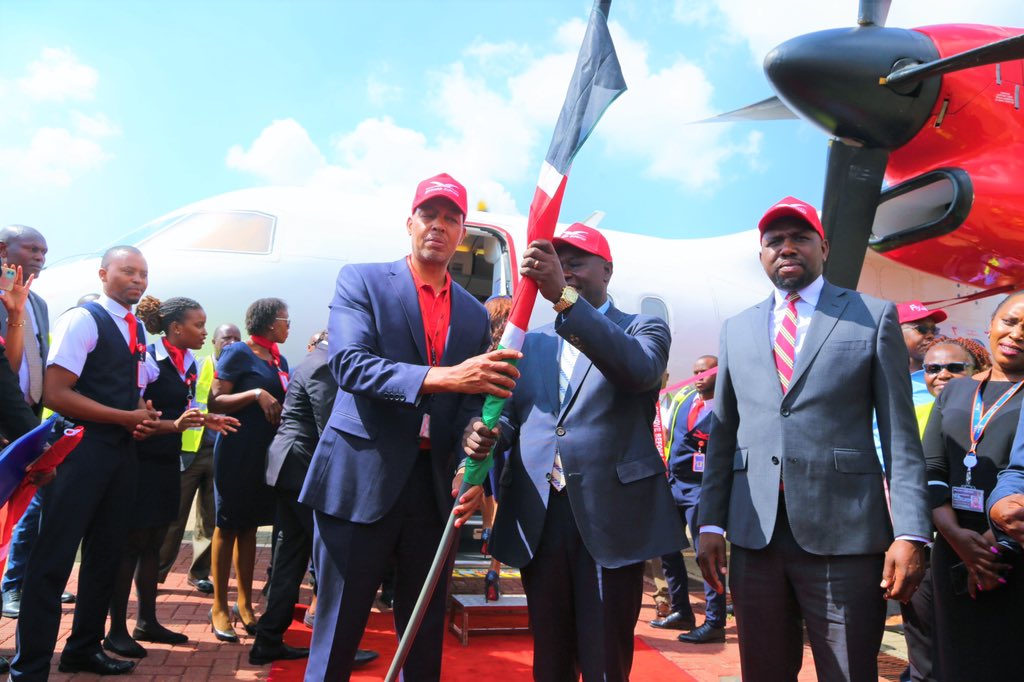
Nairobi Senator Edwin Sifuna has set off a political firestorm, claiming the Kenya Airports Authority let a secretive “flight manifest leak” expose his delegation’s itinerary ahead of the high‑stakes Linda Mwananchi rally in Kakamega. According to Sifuna, an unnamed airline tipped off a hostile crowd, which then swarmed Kisumu International Airport, ready to disrupt the team’s journey to the Amalemba grounds. The allegation not only raises eyebrows over airport security but also fuels tension ahead of the ODM‑led gathering that drew a massive crowd on February 21, 2026. As the drama unfolds, the question on everyone’s lips is: how deep does this leak run, and what does it mean for Kenya’s political landscape?
Allegations of Flight‑Detail Leak and Security Breach
Edwin Sifuna’s accusation that the Kenya Airports Authority (KAA) allowed a “flight‑detail leak” to jeopardise his delegation’s safety has ignited a fresh security debate ahead of the Linda Mwananchi rally. According to the senator, a confidential flight manifest—listing the exact time, aircraft and passenger list for the team’s arrival at Kisumu International Airport—was allegedly passed on to the Ministry of Interior and then to a hostile group that positioned itself outside the terminal. The leaked information, Sifuna claims, enabled the disruptors to map the delegation’s itinerary, erect barricades and attempt to block the party’s progress toward Amalemba Grounds in Kakamega.
The controversy centres on two points. First, the alleged breach of the flight manifest—a document normally restricted to airline and airport staff—raises questions about data handling protocols within KAA and the airlines involved. Second, the presence of a large, organised crowd at Kisumu International Airport, captured in viral videos, suggests a failure to secure the perimeter after the leak was known. Sifuna’s tweet demanded answers: “Is Kisumu still an International Airport if goons can barricade it? Explain how this happened.”
Former Nyamira Senator Mong’are Okong’o echoed the concern, warning that any routine disclosure of passenger details erodes public confidence in aviation safety. While the Standard could not independently verify the claims, the incident underscores the need for stricter control over flight‑manifest information, especially when high‑profile political figures travel for events such as the Linda Mwananchi rally.
The Role of Kenya Airports Authority and Airline Practices
The Kenya Airports Authority (KAA) is tasked with safeguarding every passenger who passes through Kenya’s air gateways, from runway safety to the protection of sensitive data. In the case of the Linda Mwananchi rally, Edwin Sifuna alleges that the authority’s lapse allowed a “flight manifest leak” that exposed the itinerary of his delegation. Under normal practice, airlines submit passenger manifests to the Ministry of Interior for security screening, but the information is supposed to remain confidential. When that data is mishandled, it can be mapped by hostile groups—exactly what Sifuna claims happened before the team’s arrival at Kisumu International Airport.
KAA’s responsibilities include controlling access to the tarmac, monitoring crowds, and coordinating with police to prevent unauthorized gatherings. If a group of “goons” was able to set up a barricade at Kisumu, it suggests a breakdown in those protocols, whether through inadequate perimeter security or a failure to act on intelligence about a potential threat. Airlines, meanwhile, are expected to follow strict data‑privacy guidelines; any deviation that results in a public “flight manifest leak” not only jeopardises the safety of the travelers but also erodes public confidence in the airport’s ability to protect them.
The controversy highlights a broader issue: when airport authorities and airlines do not enforce robust security and confidentiality standards, political delegations—like the one led by Edwin Sifuna for the Linda Mwananchi rally—become vulnerable to disruption and intimidation before they even leave the runway.
Impact on the “Linda Mwananchi” Rally and Public Safety Concerns
Edwin Sifuna’s accusation that the Kenya Airports Authority (KAA) allowed a flight manifest leak to reach hostile elements has added a new layer of tension to the already volatile Linda Mwananchi rally in Kakamega. Sifuna claims that details of his delegation’s arrival at Kisumu International Airport were passed on to a group that later blocked the runway, forcing the team to navigate a hostile crowd before proceeding to Amalemba Grounds. The alleged breach not only jeopardised the safety of high‑profile politicians—including MPs Babu Owino, Caleb Amisi and Governor James Orengo—but also raised broader questions about airport security protocols and the handling of passenger data by airlines and government agencies.
Critics, such as former Nyamira Senator Mong’are Okong’o, warn that the exposure of a flight manifest erodes public confidence and could become a repeatable tactic for political intimidation. While the Standard could not independently verify the leak, viral footage shows a sizeable group congregating outside the terminal, suggesting a coordinated effort. Sifuna’s call for KAA to clarify whether Kisumu International Airport can still guarantee passenger safety underscores the need for stricter data‑privacy safeguards and rapid response mechanisms at Kenya’s major gateways.
| Aspect | Details |
|---|---|
| Alleged leak source | Unnamed airline shared flight manifest with Ministry of Interior |
| Arrival point | Kisumu International Airport, scheduled landing before Kakamega |
| Security breach | Crowd “hired” to barricade airport after obtaining itinerary |
| Number of officials on delegation | 7 senior ODM leaders (including Sifuna, Orengo, Owino) |
| Reported incident at rally | One fatality and several violent clashes |
| KAA’s response | No official comment; investigation requested by Sifuna |
| Potential legal implications | Violation of data‑privacy laws and aviation security regulations |
Reactions from Political Leaders and Government Agencies
Edwin Sifuna’s allegation that a flight‑manifest leak facilitated a hostile crowd at Kisumu International Airport sparked an immediate chorus of responses from both opposition figures and government bodies. In a terse X post, Sifuna demanded answers from the Kenya Airports Authority, asking, “Is Kisumu still an international airport if safety cannot be guaranteed?” He insisted that the leak—purportedly from unnamed airlines to the Ministry of Interior—allowed agitators to map the delegation’s itinerary and set up a barricade that delayed the team en route to the Linda Mwanachi rally.
Former Nyamira Senator Mong’are Okong’o echoed the concern, warning that any disclosure of passenger travel details erodes public confidence in security protocols. “When a flight manifest becomes public fodder for disruption, we undermine the very fabric of safe air travel,” he said at a press briefing, urging the Ministry to tighten data‑privacy safeguards.
The Kenya Airports Authority, through its spokesperson, responded that standard security procedures were followed and that no official record of a manifest breach exists. The agency pledged a “full internal audit” and promised to cooperate with the Ministry of Interior to identify any procedural lapses.
Other ODM leaders—Governor James Orengo, MPs Babu Owino and Caleb Amisi, among others—stood by Sifuna, describing the incident as a “politically motivated intimidation tactic.” Their collective statements underscore a growing debate over election‑season logistics, airport security, and the need for clearer protocols to prevent future flight‑manifest leaks.
Implications for Kenya’s Aviation Security and Data‑Protection Policies
The controversy sparked by Edwin Sifuna’s accusation that the Kenya Airports Authority (KAA) allowed a “flight manifest leak” has reignited a debate over the robustness of Kenya’s aviation security and data‑protection framework. If airline staff indeed passed the delegation’s itinerary to the Ministry of Interior, as Sifuna alleges, it would represent a breach of the International Civil Aviation Organization’s (ICAO) standards that require passenger information to be kept confidential until it is needed for security screening. Such a leak makes it easier for hostile groups to map out arrival times, as was alleged to have happened at Kisumu International Airport before the Linda Mwananchi rally.
Under current Kenyan law, personal data—including travel details—are protected by the Data Protection Act 2019, which mandates that any processing of sensitive information must have a lawful basis and be proportionate to the security need. A failure to safeguard a flight manifest not only jeopardises the safety of high‑profile passengers but also erodes public confidence in the airport’s ability to enforce basic security protocols.
The incident also raises practical questions for KAA: should access to flight manifests be restricted to a smaller pool of vetted officials, and how can real‑time monitoring be improved to prevent “goons” from barricading airport perimeters? A transparent inquiry into the Kisumu International Airport episode could prompt tighter controls, clearer accountability chains, and stronger penalties for unauthorized disclosure—steps that would reinforce both aviation safety and data‑privacy protections across Kenya.