
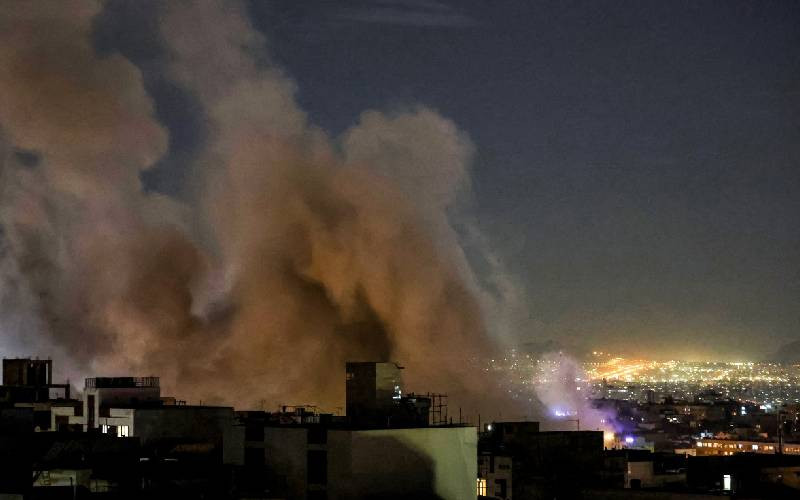
As tensions escalate in the Middle East following the death of Iran’s Supreme Leader, Ayatollah Ali Khamenei, Kenya faces significant economic and security threats stemming from Iran’s retaliation. With a population of over 54 million and a GDP nearing $110 billion, Kenya’s strategic position and growing trade ties with the Middle East place it at the heart of unfolding global risks. The country’s robust media, tourism, and agricultural sectors—pillars of its economy—are now exposed to heightened uncertainty. This article explores how Iran’s response to recent events could reshape Kenya’s economy and security landscape, and what the future may hold for its citizens.

Who is How Iran’s Retaliation Threatens Kenya’s Economy, Security?
| Event/Incident | Coordinated military strikes against Iran |
| Date/Time | March 1, 2026 |
| Location | Tehran, Iran; Middle East |
| Key People/Organizations involved | United States, Israel, Iran |
| Status/Current Situation | Middle East plunged into a new and dangerous chapter |
| Impact/Casualties | Threatens Kenya’s economy and security |
| Other Relevant Details | Missile strike caused a smoke plume in Tehran |
This issue is particularly relevant to Kenya due to its strong economic and geopolitical ties to the Middle East. Kenya relies heavily on the region for vital imports such as petroleum products, and maintains active diplomatic and trade relations with Iran and other Gulf states. As Iran signals its intent to respond to the attacks, the ripple effects could directly influence Kenya’s economic stability and national security. The article explores why these developments in the Middle East are not just distant geopolitical events, but matters of immediate concern for Kenya’s economy and the safety of its citizens, given the country’s interconnectedness with the region.
Historical Context: Kenya’s Ties to Iran and the Middle East
Kenya has maintained diplomatic and economic relations with Iran and the broader Middle East for decades, recognizing the region’s strategic importance to its national interests. The two countries established formal diplomatic ties in the 1980s, with embassies in Nairobi and Tehran facilitating bilateral engagements. Over the years, Kenya and Iran have signed several cooperation agreements spanning trade, technology, and education. Iran has been a key market for Kenyan tea, one of the country’s major exports, and both nations have explored partnerships in the energy sector, particularly in oil and gas.
Kenya’s economic dependencies on the Middle East extend beyond Iran, as the region serves as a critical source of petroleum imports, which power the country’s industries, transport, and electricity generation. The Port of Mombasa acts as a gateway for goods moving between East Africa and Middle Eastern markets, further underlining the region’s significance for Kenya’s trade flows. In the past, relations have faced occasional tensions, including incidents involving Iranian nationals accused of espionage and concerns over the activities of Iranian-linked entities in Kenya. Nonetheless, the enduring ties highlight the importance of stability in the Middle East for Kenya’s economic growth and security.
Economic Impact of Iran’s Retaliation on Kenya
Iran’s retaliation has sent shockwaves through global markets, posing immediate risks to the Kenya economy. As a nation heavily reliant on imports from the Middle East—particularly petroleum products—Kenya faces the threat of sharp increases in energy prices. According to the Kenya National Bureau of Statistics, over 60% of Kenya’s crude oil imports originate from the Gulf region. Any disruption to shipping lanes or oil production could trigger a surge in fuel costs, pushing up inflation and increasing the cost of living for Kenyan households and businesses.
The ripple effects extend beyond energy. Kenya’s agricultural exports, such as tea, coffee, and horticultural products, depend on stable shipping routes through the Red Sea and Suez Canal. Heightened tensions or blockades could delay shipments, erode profit margins, and undermine the competitiveness of Kenyan goods in global markets. Additionally, the uncertainty surrounding the Middle East conflict may deter foreign investors, who often view regional stability as a prerequisite for investment. The Central Bank of Kenya has warned that prolonged volatility could slow economic growth, with sectors like transport, manufacturing, and trade bearing the brunt of these disruptions. In sum, Iran’s actions threaten to destabilize key pillars of Kenya’s economy, amplifying existing vulnerabilities and challenging the country’s growth trajectory.
Security Risks for Kenya Amid Middle East Escalation
The escalation of conflict in the Middle East following Iran’s retaliation presents heightened security risks for Kenya. With Iran vowing to respond to the recent strikes, there is a significant increase in the threat of terrorism, both regionally and domestically. Kenyan security agencies are on high alert for potential retaliatory attacks by Iranian-linked groups or their proxies, especially against Western interests and critical infrastructure within Kenya. The risk is particularly acute in urban centers such as Nairobi and Mombasa, which have previously been targeted by extremist groups. Enhanced vigilance is also being observed around diplomatic missions, transport hubs, and public spaces, as authorities anticipate possible attempts to exploit the tense geopolitical climate.
Kenyan citizens and businesses operating in the Middle East now face greater personal and operational dangers. The Foreign Affairs Ministry has issued advisories urging Kenyans in countries like the United Arab Emirates, Saudi Arabia, and Qatar to exercise caution and stay updated on security developments. There is growing concern that instability in the region could spill over into East Africa, with the possibility of radicalized elements attempting to carry out attacks or recruit locally. In response, Kenyan security forces have intensified surveillance, border controls, and intelligence-sharing efforts with international partners to preempt any threats linked to the Iran conflict. The evolving situation underscores the need for continued vigilance as Kenya navigates the complex security landscape shaped by Middle East tensions.
Kenya’s Government Response and Diplomatic Strategy
In response to the escalating Middle East conflict and the threat of Iran retaliation, Kenya’s government has moved swiftly to reassure citizens and protect national interests. President William Ruto publicly condemned the violence in the region, urging all parties to pursue urgent de-escalation and dialogue. The Ministry of Foreign Affairs issued advisories to Kenyans living and working in the Middle East, emphasizing vigilance and close contact with Kenyan embassies. High-level meetings between security agencies have been convened to assess potential security risks and coordinate a unified response.
Diplomatically, Kenya has intensified engagement with international partners to mitigate the impact of the crisis on the Kenya economy and security. The government is working closely with the African Union and the United Nations, advocating for collective action to stabilize the region. Kenya has also sought to strengthen its alliances with key Middle Eastern nations, including Saudi Arabia and the United Arab Emirates, to ensure the continued flow of essential imports and safeguard bilateral relations. Policy adjustments are underway, with the Cabinet reviewing contingency plans and exploring options to diversify energy sources, reduce economic threats, and bolster national security. These proactive measures underscore Kenya’s commitment to navigating the complex challenges posed by the Middle East conflict while protecting its citizens and economic stability.
Expert Opinions and Regional Analysis
Leading economists warn that Iran’s retaliation could trigger a surge in global oil prices, directly impacting Kenya and other East African economies that rely heavily on Middle Eastern energy imports. Dr. David Ndii, a prominent Kenyan economist, notes that even a modest spike in oil prices can increase transportation and production costs, fueling inflation and putting pressure on household budgets. Regional trade experts highlight that disruptions in shipping lanes, particularly through the Red Sea, could delay imports and exports, undermining Kenya’s position as a regional trade hub and affecting neighboring countries like Uganda and Rwanda.
Security analysts emphasize that the heightened Middle East conflict raises the risk of extremist groups exploiting regional instability. According to Dr. Mustafa Ali, a Horn of Africa security specialist, Kenya’s historical vulnerability to transnational terror networks makes it particularly susceptible to spillover threats. Experts also point out that other African nations with significant diaspora in the Gulf, such as Ethiopia and Nigeria, face similar economic and security risks. However, Kenya’s strategic location and its role in international counterterrorism efforts mean that any escalation in the Middle East could have outsized repercussions for its security landscape. Regional analysts agree that the interconnectedness of African economies with the Middle East magnifies the impact of geopolitical shocks, underscoring the urgent need for coordinated regional responses.
Future Outlook: What’s Next for Kenya?
Looking ahead, Kenya faces a period of heightened economic and security uncertainty as the repercussions of Iran’s retaliation continue to ripple through the global landscape. With the Middle East conflict threatening to escalate, Kenya’s economy could experience further shocks, particularly in areas such as energy prices, trade flows, and inflation. Should disruptions in oil supply persist or intensify, businesses and consumers may face sustained increases in fuel and transport costs, which could in turn drive up the prices of essential goods and services. The risk of declining foreign investment and reduced export demand also looms, potentially slowing economic growth and affecting job creation in key sectors.
On the security front, Kenya must prepare for evolving threats. The possibility of increased terrorist activity, both domestically and against Kenyan interests abroad, remains a pressing concern as regional instability grows. Businesses operating in sensitive sectors, such as tourism and logistics, should reassess their risk management strategies and enhance security protocols. Policymakers are advised to diversify energy sources, strengthen intelligence-sharing with allies, and develop contingency plans for supply chain disruptions. By proactively addressing these vulnerabilities, Kenya can better navigate the challenges posed by ongoing Middle East tensions and safeguard its economic and national security interests in the months ahead.
Source: [The Standard](https://www.standardmedia.co.ke/national/article/2001542053/how-irans-retaliation-threatens-kenyas-economy-security)